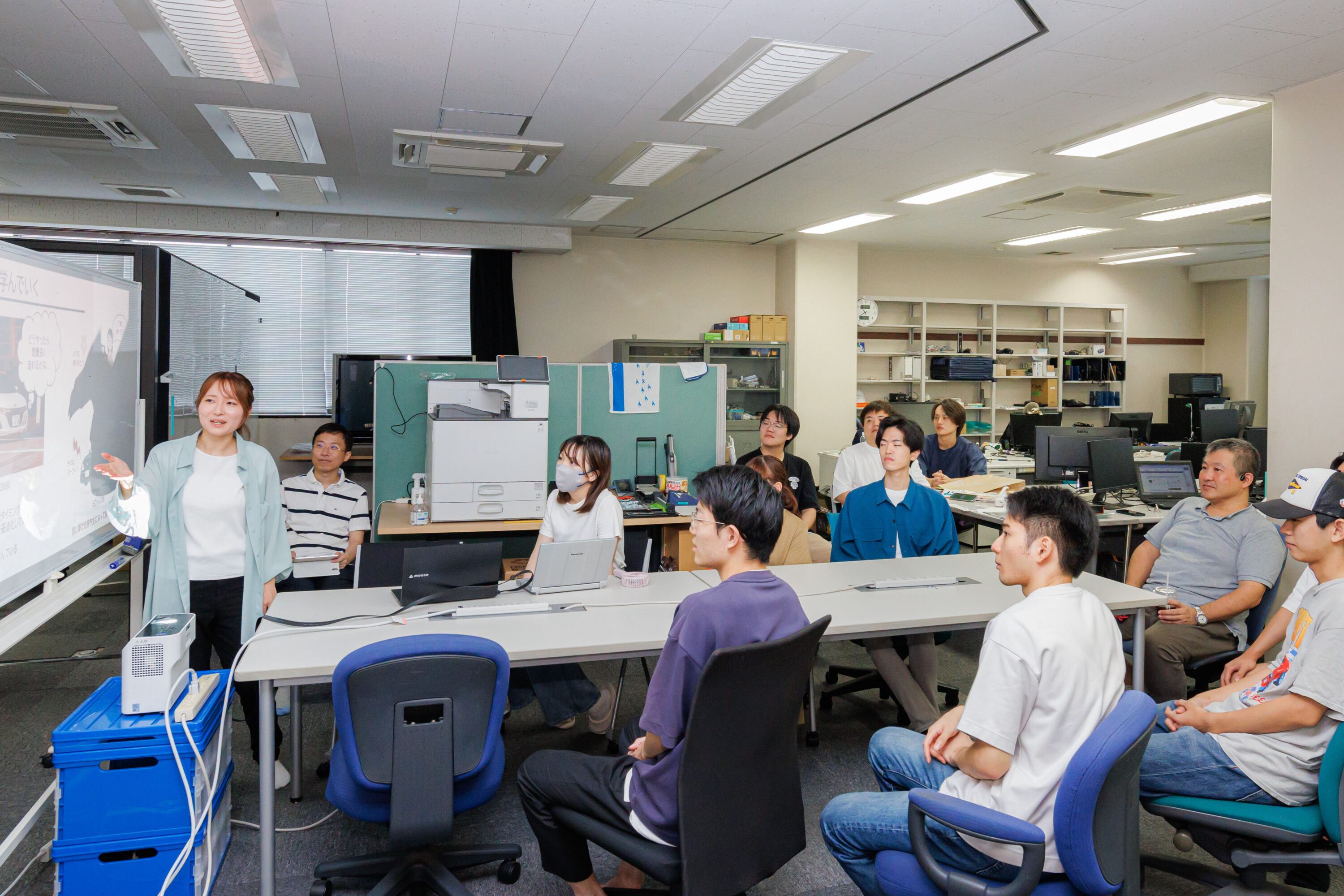
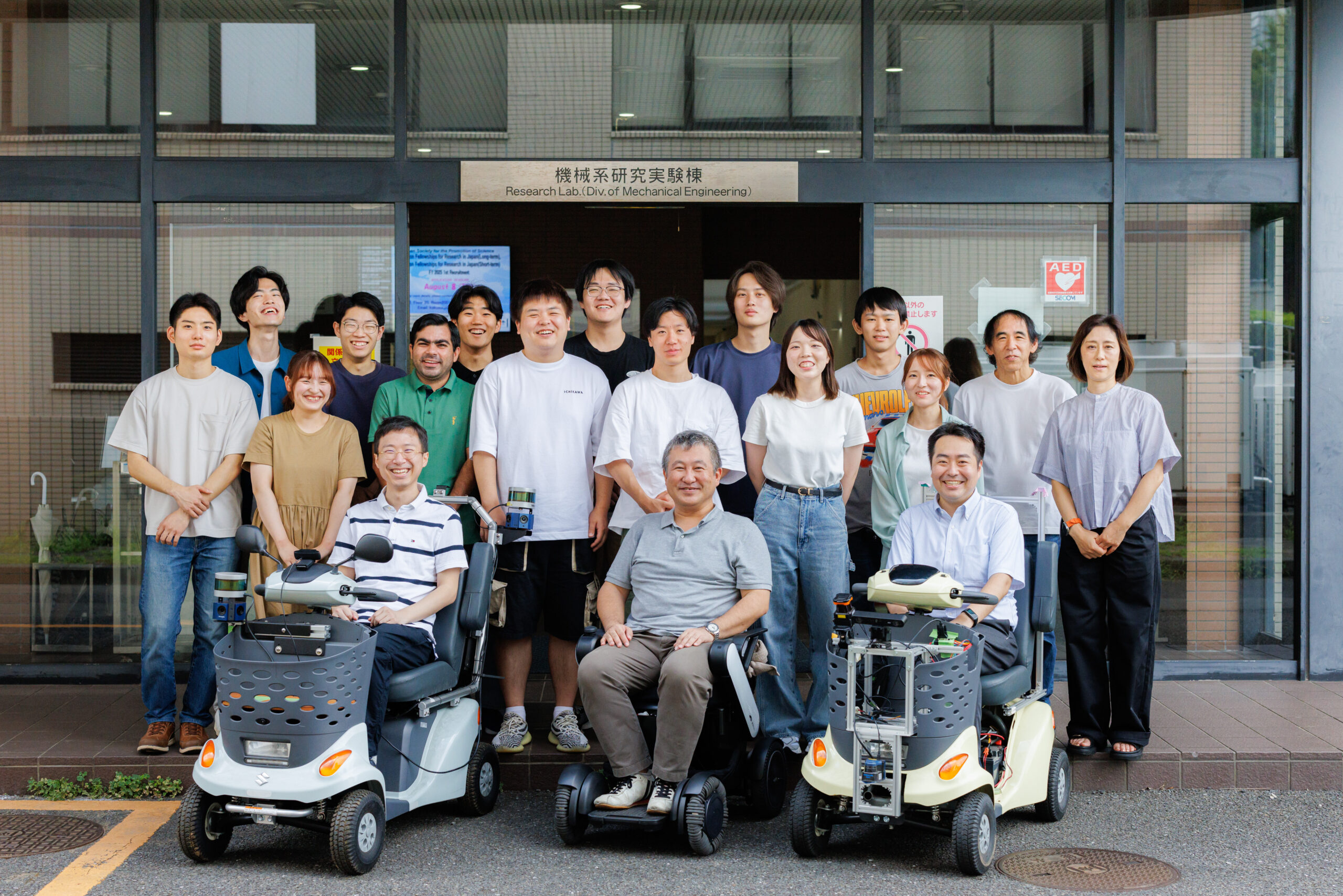
What kind of research is conducted in the Shino Laboratory?
We study human life as it evolves in response to societal changes such as population aging, increasing personalization, and globalization, from the broad perspectives of quality of life and quality of living. By integrating knowledge from all disciplines related to daily life, we aim to develop novel assistive devices and to design social systems that support people in their everyday activities.
Based on fundamental fields such as mechanical dynamics, control engineering, and ergonomics, we focus on interfaces in daily life between people, between people and objects, and between people and events. Assuming situations in which people move and use objects, we measure human behavior and motion in daily life, as well as changes in cognition and psychology and the resulting physiological responses, using sensing systems. Based on these measurements, we design assistive devices and systems that contribute to safe, secure, and comfortable living.
What are the characteristics of the Kotake Laboratory?
Through collaboration with industry, local governments, hospitals, and other organizations, we promote joint research projects and academic exchanges between academia, industry, and the public sector. Our goal is to cultivate professionals and knowledge-oriented human resources who can contribute immediately to society. Through collaborative research, students gain not only academic knowledge but also practical experience and real-world skills.
What can you gain from the Kotake Laboratory?
Students acquire methodologies for structuring the mechanisms by which humans adapt to and interact with their living environments, and for constructing integrated human–environment–machine systems that enable the prediction and prevention of human error. These methodologies contribute to areas such as comfortable environment design, cooperative design, universal design, intelligent systems, and vehicle design. Furthermore, through collaborative research, students deepen their studies and aim to practice applied, field-based research that directly benefits society.